How I Build // 01
Live work, documented as it grows. Last updated October 2026.
A generation is being priced out of white-collar work. I mapped the gap, then built the tool that addresses it.
Live deployed product. Designed and directed end to end with an agentic AI build method.
In the second quarter of 2026, unemployment for recent US college graduates was still elevated at about 5.6% (New York Fed). The entry-level white-collar path was supposed to be safe.
Trades are expanding. The information layer that would help a young person navigate into them does not exist.
That is not a content problem. It is an architecture problem. Nobody has built the orientation layer that sits before the commitment.
How I mapped it.
I mapped the system before I touched the product. Who holds the knowledge. Where it lives. Why it never reaches the person who needs it at the moment they need it. Then I built an intervention at the exact point the system fails.
35%
Revelio Labs, 2026
fall in US entry-level job postings since early 2023
66%
IDC for Deel, 2025
of enterprises expect to slow entry-level hiring because of AI
5.6%
New York Fed, Q2 2026
unemployment rate for recent US college graduates
How I work.
I sketched. I mapped the emotional architecture. I put the pieces together so I could see the system before I tried to fix it.
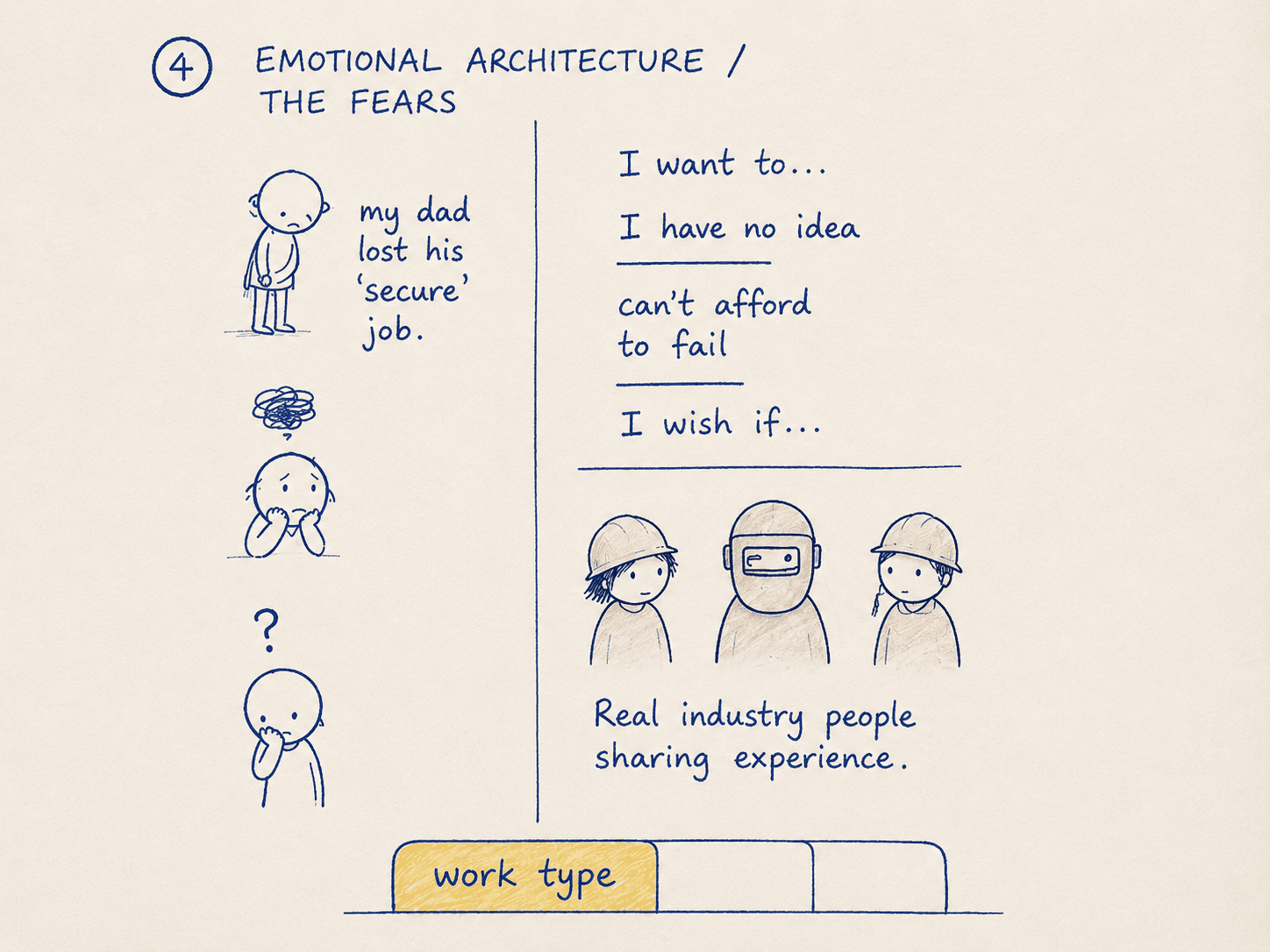
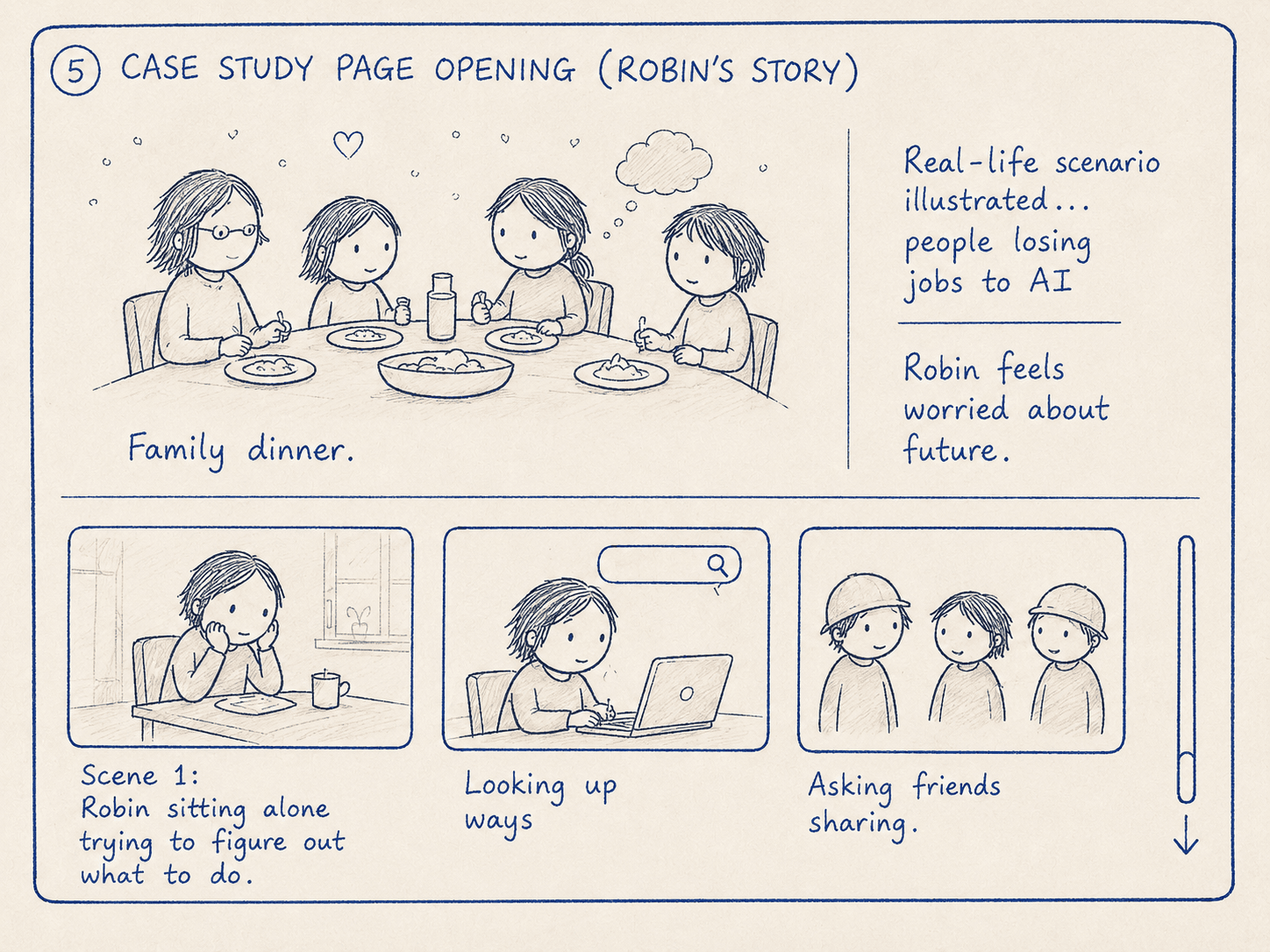
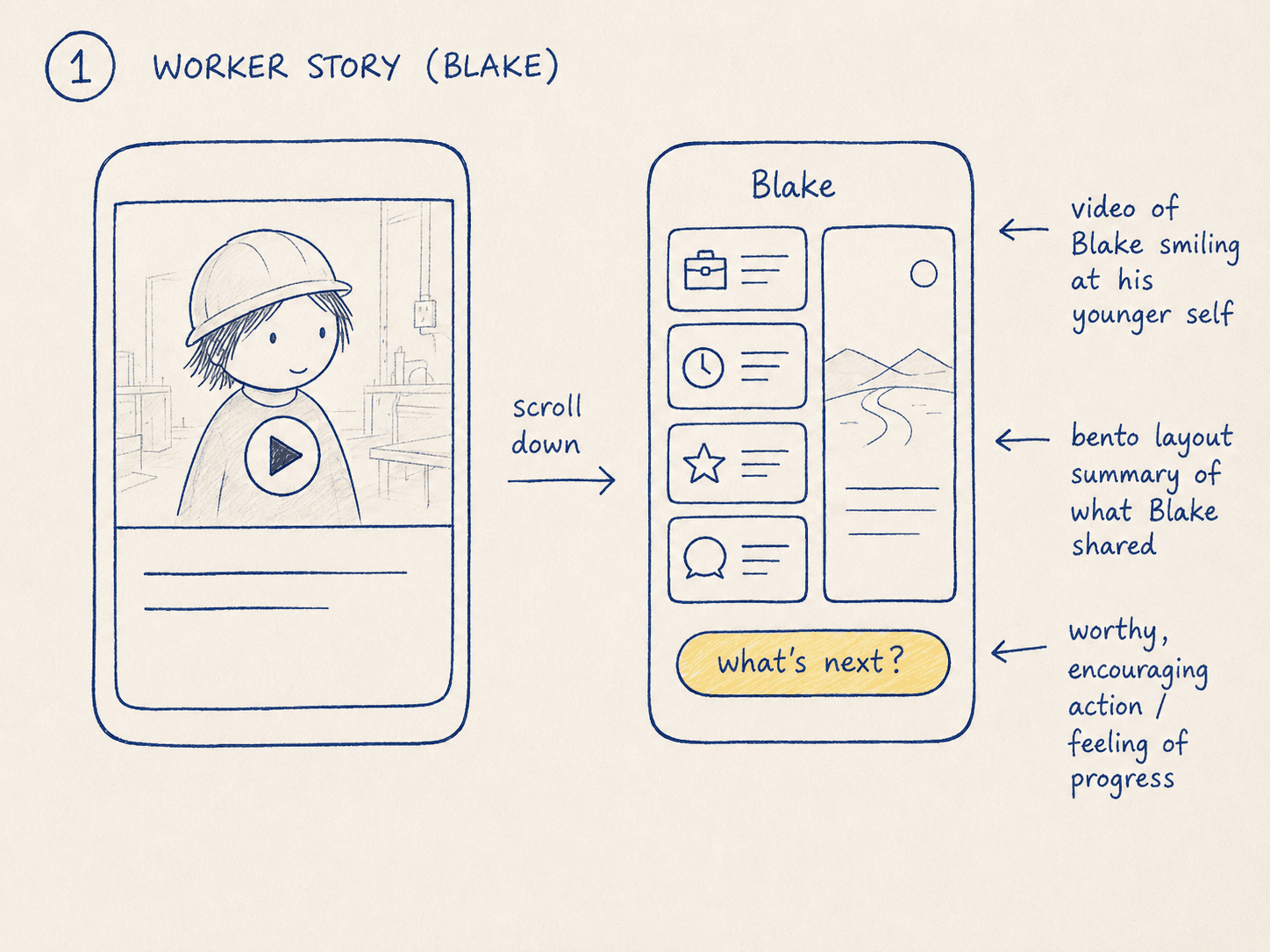
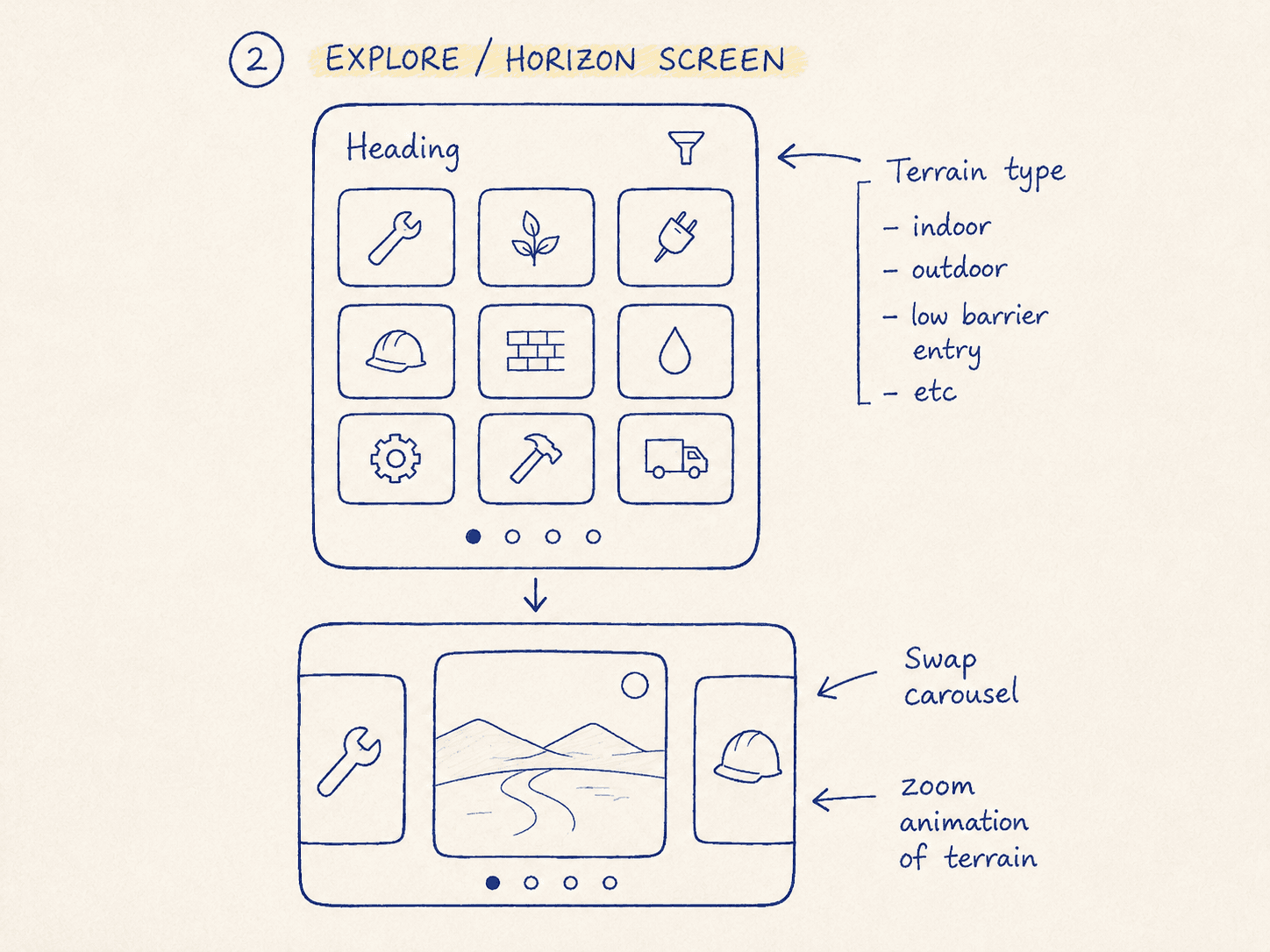
How I Build
The structural read
Entry-level white-collar work is contracting because AI handles the tasks that justified those roles. Trades require physical presence, contextual judgment, and accumulated tacit knowledge. The gap is not skills. It is information asymmetry at the point of entry.
The social weight
When a generation cannot find stable footing, the cost does not stay private. It compounds across healthcare systems, housing markets, and social cohesion. Designing for that moment is not charity. It is upstream intervention.
The business case
Platforms that own the orientation moment own the relationship. The apprenticeship and trades market in the US alone is a $200B+ sector with no consumer-facing product at the discovery layer. Terrain sits at that entry point.
Here is what I found. As of June 2026, there is almost no way for a young person to see the terrain ahead and get a foot in. The tools that cover the rest of the journey exist. The first step, the seeing, does not.
Robin did what anyone would. Searched. Asked around. Found a lot of advice and nothing that helped you see what a kind of work actually feels like before you commit your time, your money, your hope to it.
So here is what I built. A way to walk the terrain before you commit to it.
Try it the way Robin would. There is no right answer, and nothing to sign up for. Just look around.
This prototype is live.
How it was built
I directed this build end to end using Claude Code. A Claude Code hook blocks the agent from writing hard-coded hex colours, so colours stay tied to the token system. An automated accessibility scan found no violations on all ten screens in October 2026, and a screen-reader review is still to do. Sixteen documented build sessions.
This is not a prototype made in Figma. It is a deployed product with live interactions, built to a production standard with me directing the AI agent.
Next.js, React, TypeScript, Tailwind CSS, Framer Motion, deployed on Vercel.
MethodBuilt in Claude Code through an agentic design workflow. A Claude Code hook blocks the agent from writing hard-coded hex colours, so colours stay tied to the token system. Automated accessibility scan with axe-core and Playwright against WCAG 2.2 AA rules: no violations on all ten screens in October 2026, screen-reader review still to do. Documented throughout in a 16-entry process book.
This is how I work. I start with the person, not the product. I stay with the problem longer than is comfortable. Then I direct the build myself, end to end, until the thing exists.
Robin is one story. The method is the same every time.
This is what I do for organisations.
I find the place where your AI deployment is creating a gap your current team cannot see, design the intervention, and direct the build myself. You get a system that works, documented so your team can maintain it, built faster than a traditional hire cycle.
If you are making decisions about AI implementation and you want someone who starts with the structural problem, let's talk.