Case Study · Supply Chain Safety · AI
Preventing Workplace Accidents with AI
How I built Avetta's first Generative AI product. An AI Risk Advisor that changed how safety assessments work across the supply chain.
Role
Lead Strategic UX Designer
Company
Avetta
Outcome
Beta Release · Industry First
Introduction
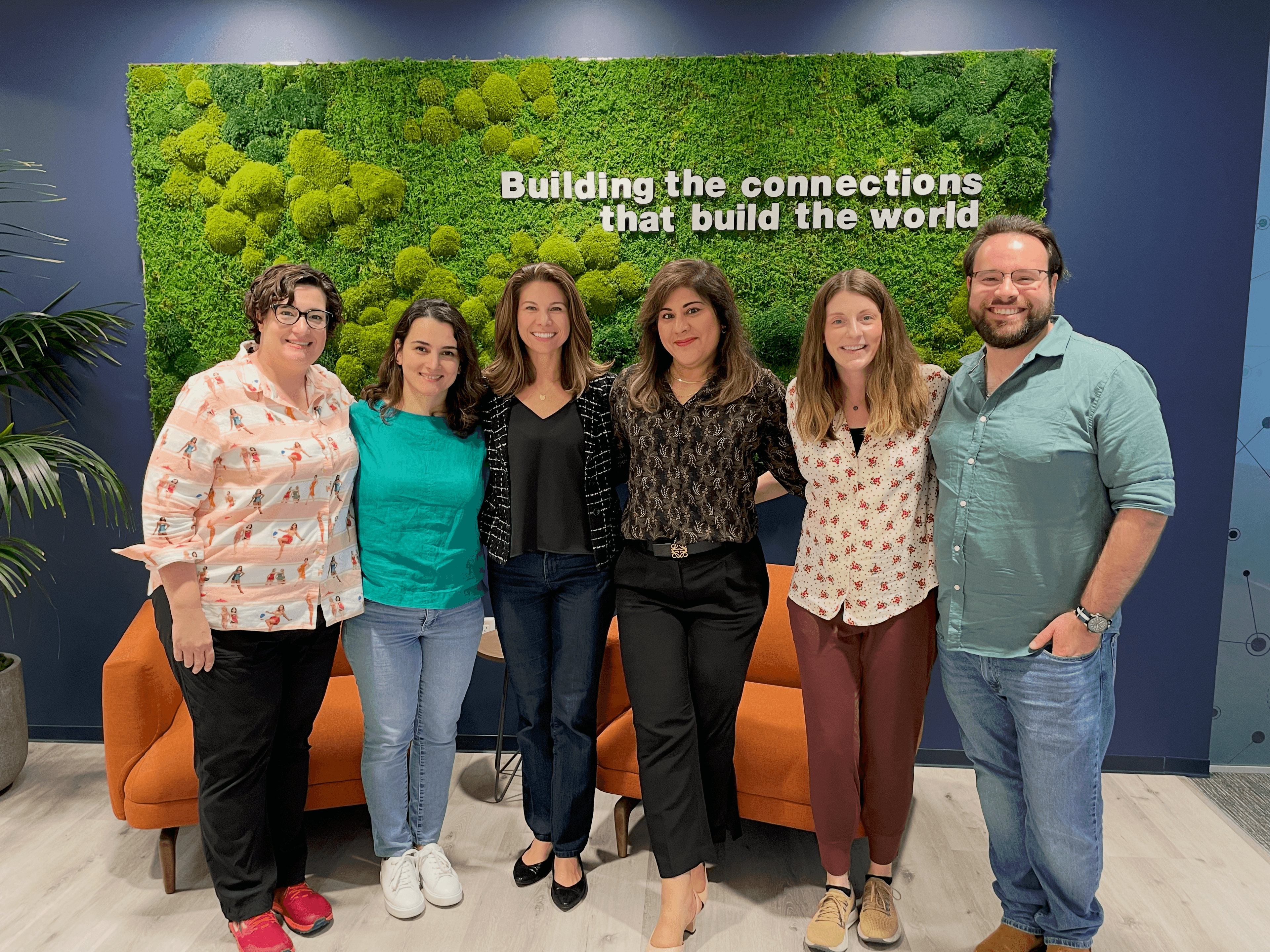
The Business
Avetta
Risk Management Solutions
Avetta connects the world's leading organisations with qualified suppliers, contractors and vendors. They manage workforce risk and compliance across the global supply chain.
My Role
Lead Strategic UX Designer
Full-stack strategic lead. Engaging stakeholders, running learning missions, and observing users in their environments to identify opportunities for positive impact.
Teams
US · Australia
Platform
Worker Solutions
The Challenge
Use AI to prevent accidents, not just respond to them.
In the high-stakes world of supply chain risk management, where a single lost-time injury costs an average of $35,000, Avetta faced a critical challenge: how could we use technology to prevent workplace accidents, not just respond to them?
"I spent hours filling out a form that didn't get approved. Crafting a form from the ground up? Tough stuff!"
Rhonda, Supplier Admin
The Goal
First in the industry to ship Generative AI
Generative AI was new. The team was tasked with finding real user problems it could solve, positioning Avetta as the first platform in the industry to ship it.
Simplify complexity
Reduce the friction of completing complex safety forms
Real-time guidance
Provide contextual AI assistance to users in the moment
Predictive safety
Enhance workplace safety through predictive insights
The Journey
Immersive Research
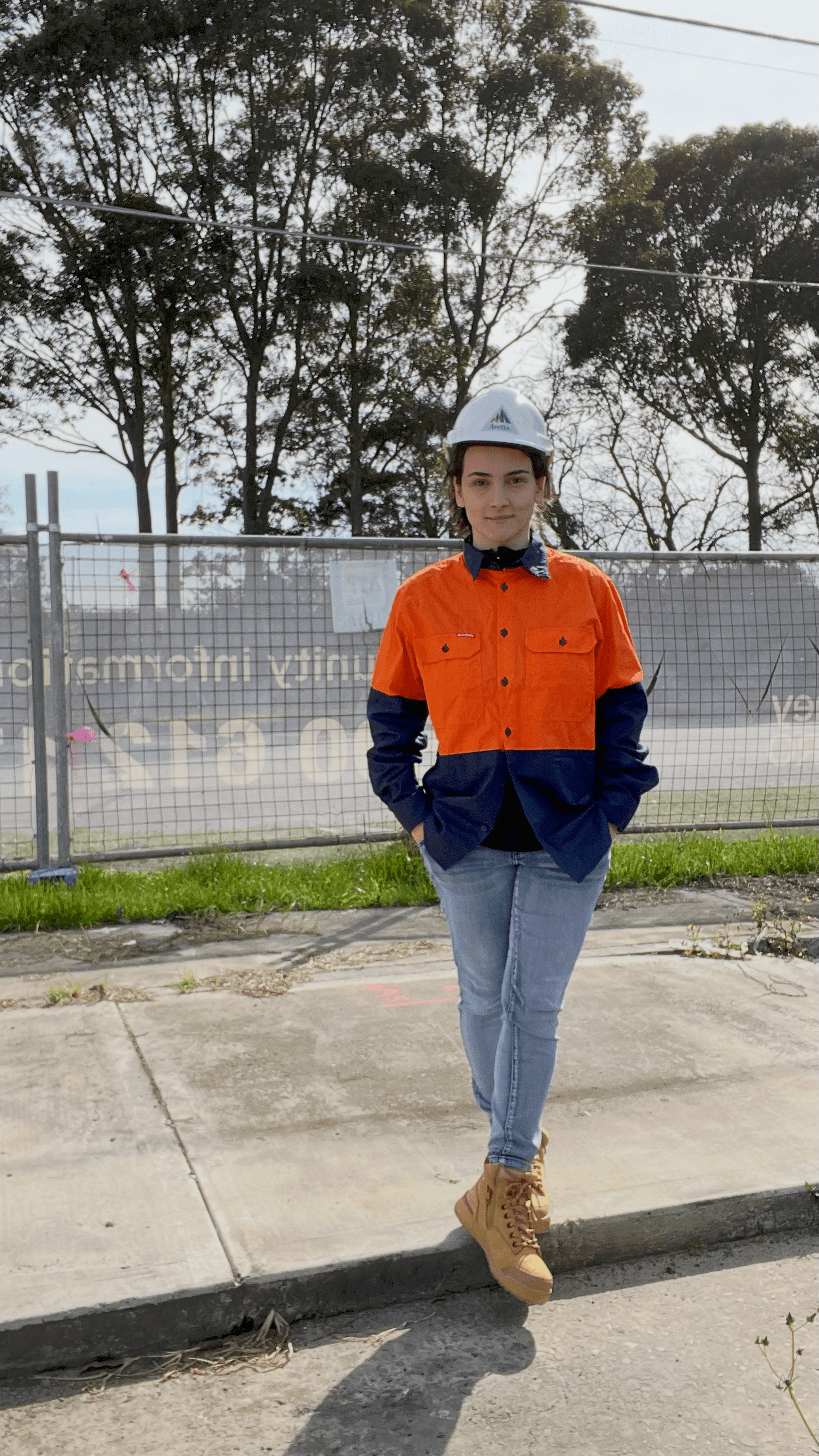
I ran the first on-site visits to client locations in our product team's history. These visits gave us direct insight into the business, users, and operational tools. The impact was significant enough that I was invited to the Houston Summit to share findings with the executive team and secure buy-in from top leadership.
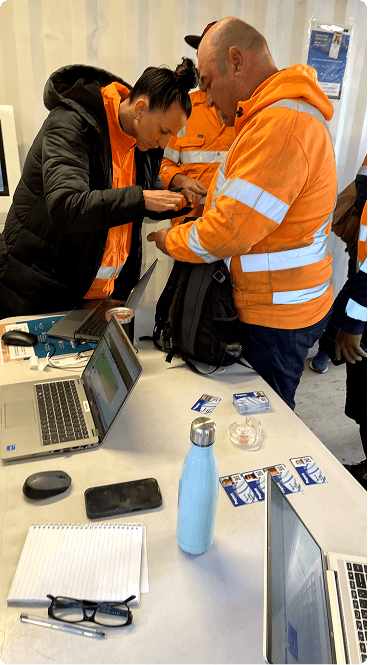
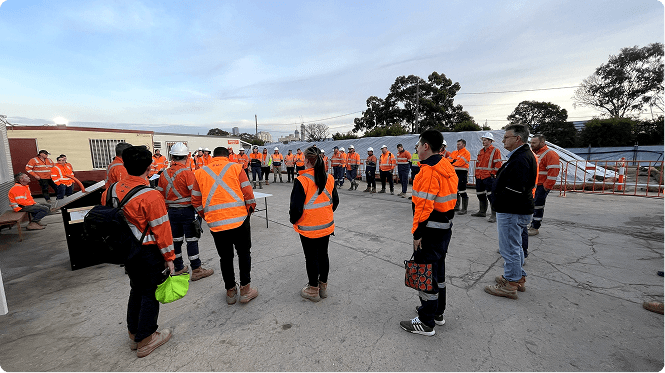
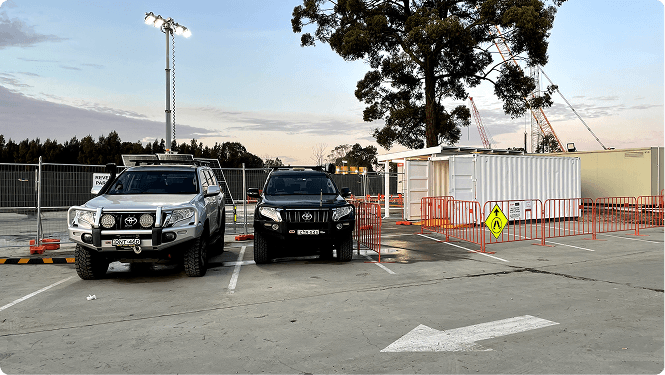
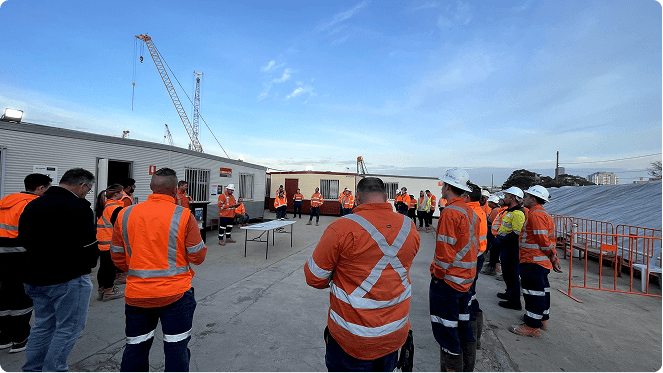
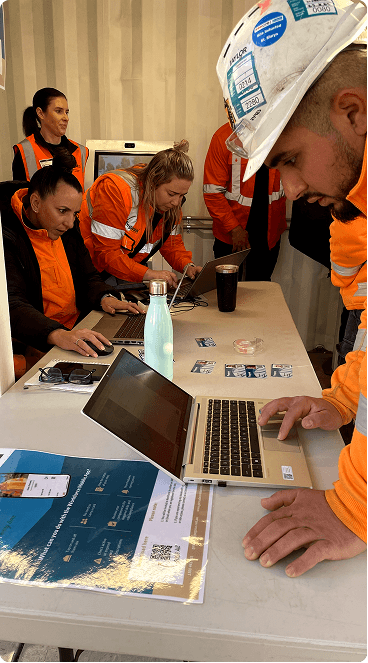
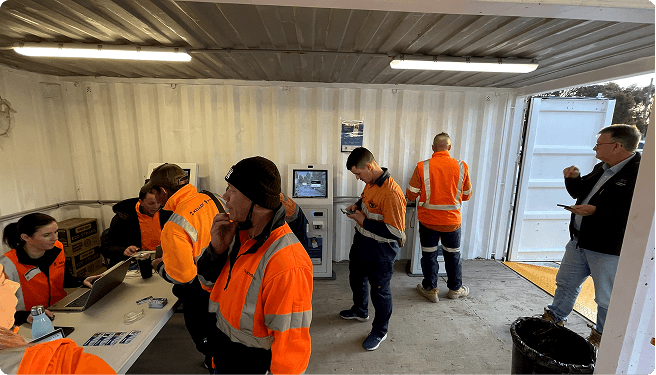
On-site field research, client locations, Australia · First UX visit in company history
On-site field research
Problem Identification
Through user feedback and on-site observations, we uncovered key pain points: contractors lacked safety expertise to complete forms effectively, form creation was time-consuming and error-prone, and high rejection rates led to frustration and delays.
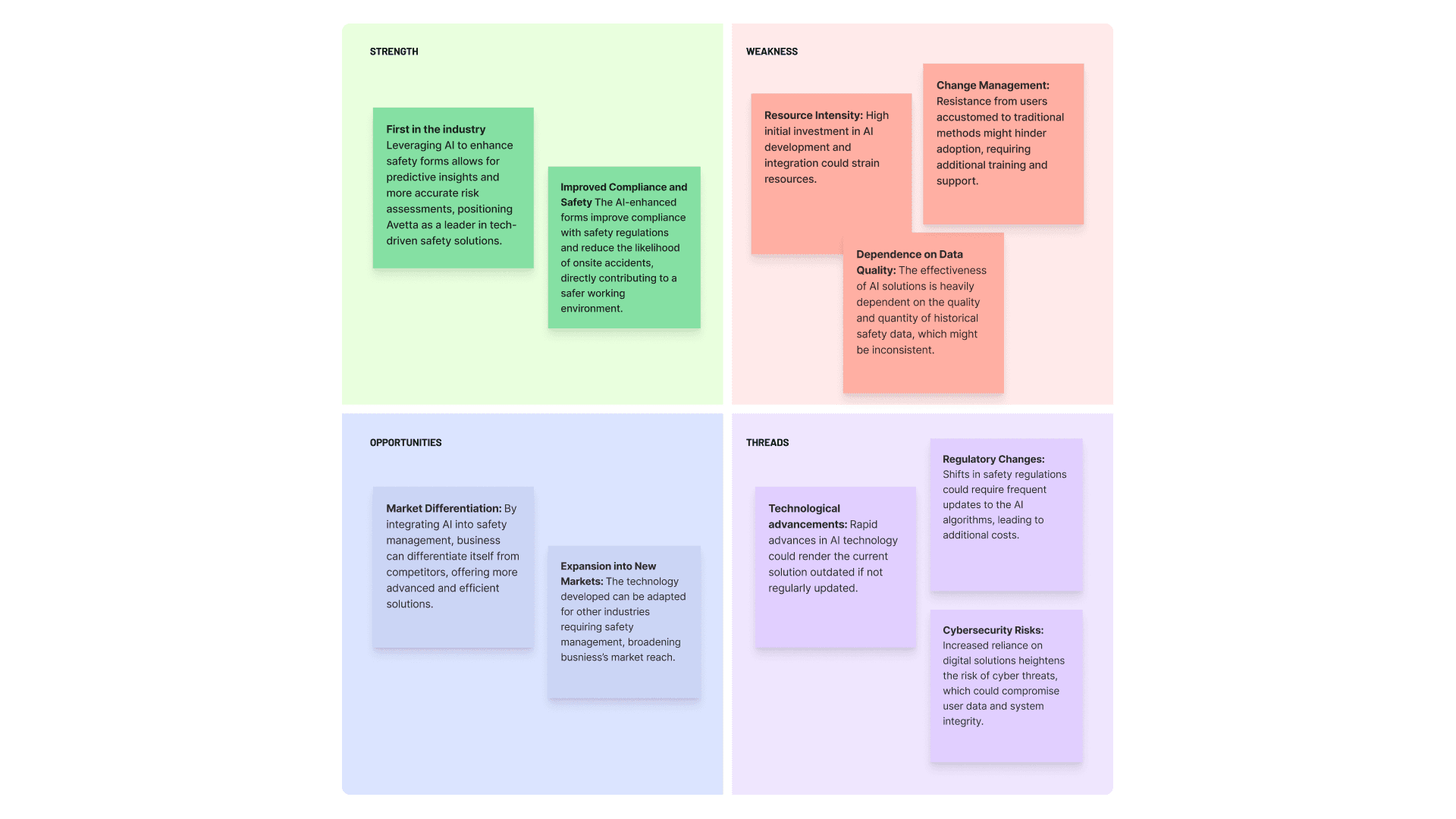
Strength
First in the industry
Using AI to enhance safety forms generates predictive insights and more accurate risk assessments, positioning Avetta as a leader in tech-driven safety solutions.
Improved Compliance and Safety
The AI-enhanced forms improve compliance with safety regulations and reduce the likelihood of onsite accidents.
Weakness
Resource Intensity
High initial investment in AI development and integration could strain resources.
Change Management
Resistance from users accustomed to traditional methods might hinder adoption, requiring additional training.
Dependence on Data Quality
The effectiveness of AI solutions is heavily dependent on the quality and quantity of historical safety data.
Opportunities
Market Differentiation
By integrating AI into safety management, Avetta can differentiate itself from competitors, offering more advanced solutions.
Expansion into New Markets
The technology can be adapted for other industries requiring safety management, broadening market reach.
Threats
Regulatory Changes
Shifts in safety regulations could require frequent updates to the AI algorithms, leading to additional costs.
Technological Advancements
Rapid advances in AI technology could render the current solution outdated if not regularly updated.
Cybersecurity Risks
Increased reliance on digital solutions heightens the risk of cyber threats, which could compromise user data.
Fig A. SWOT Analysis. Strategic assessment of the AI opportunity.
Empathy Building
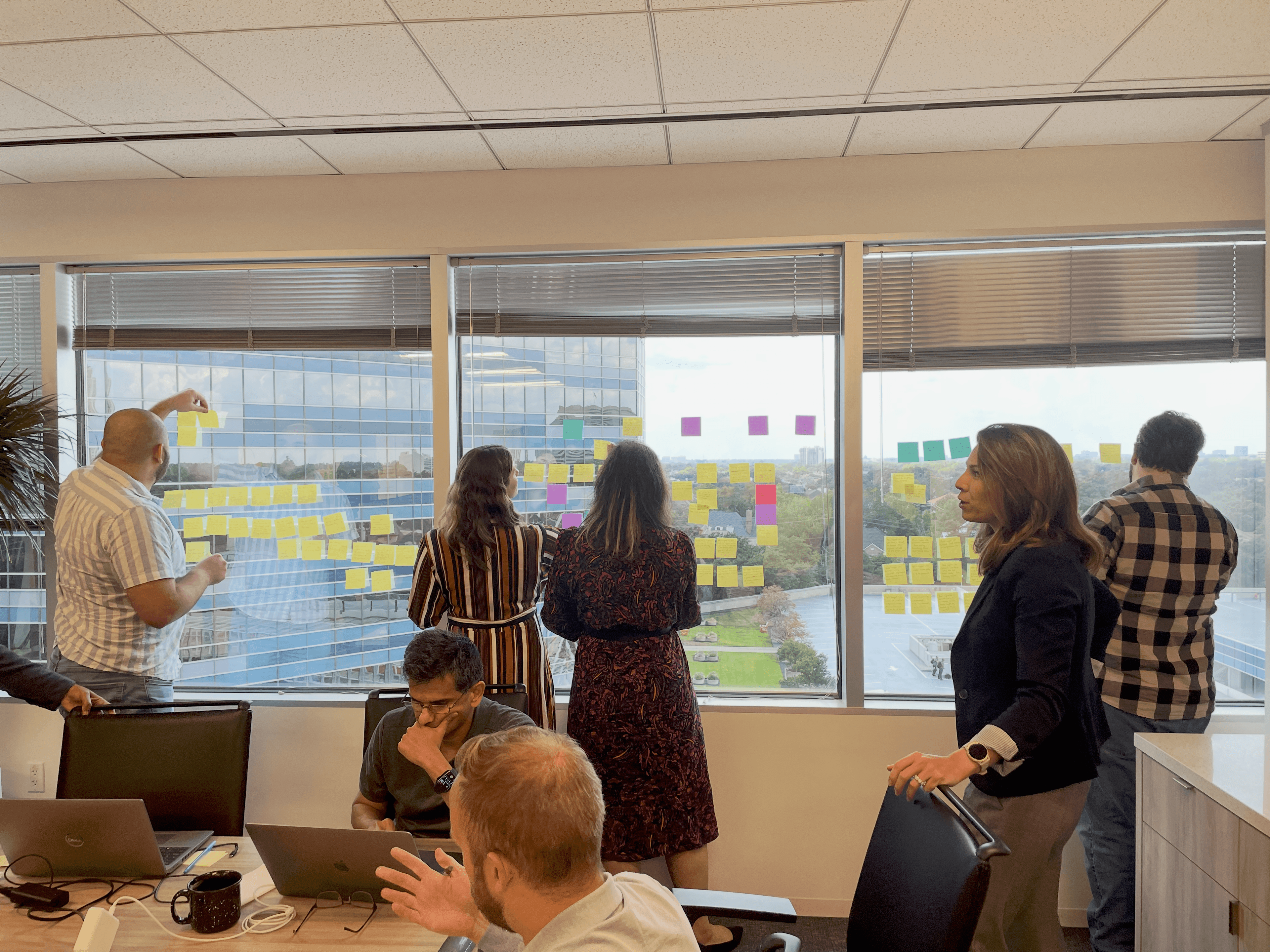
I developed storyboards focusing on user emotions and thoughts, the potential role of AI, and maintaining trust throughout the process. This approach proved highly effective in building team empathy and aligning our shared vision.
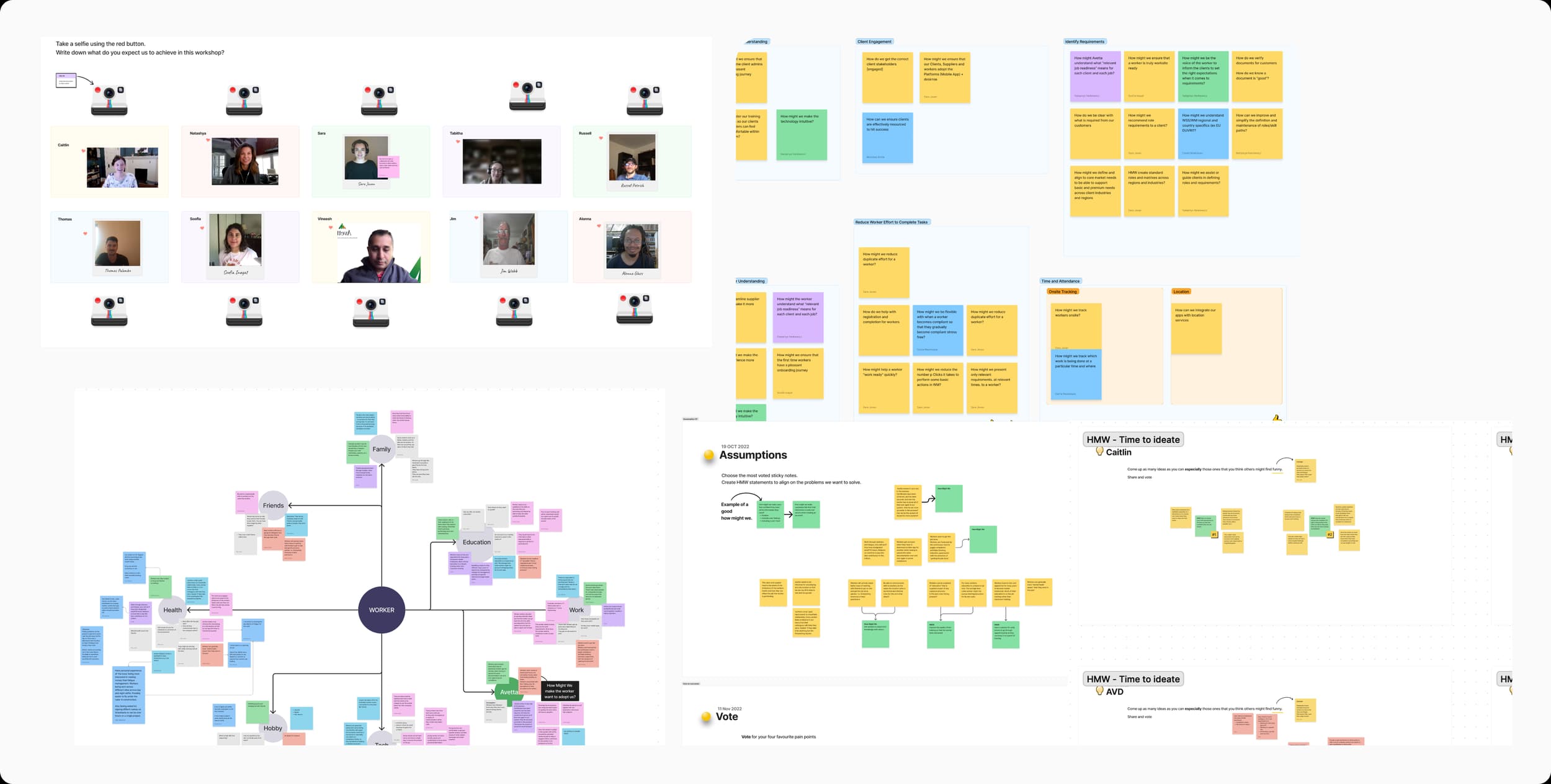
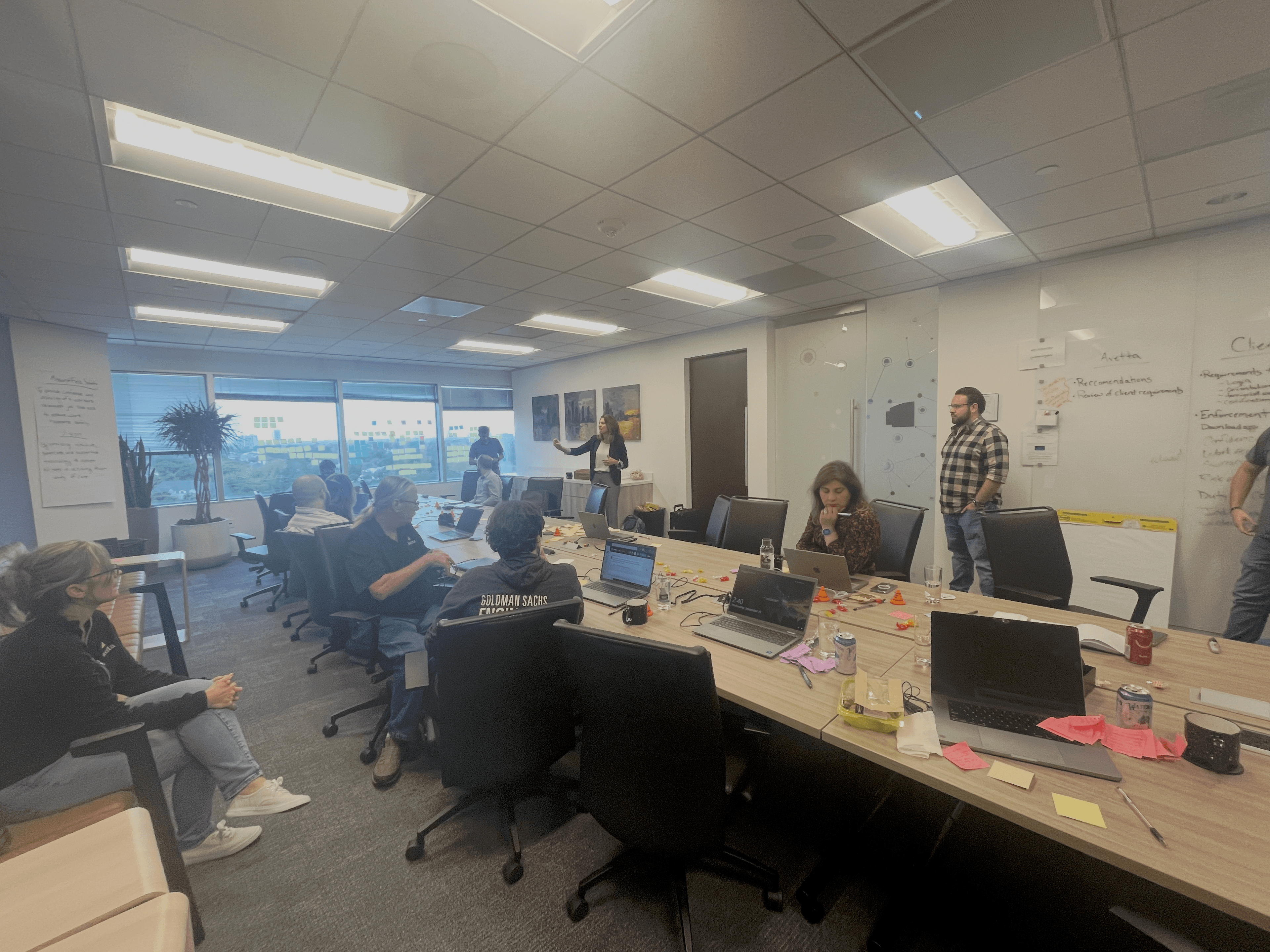
Ideation session, co-creation workshop
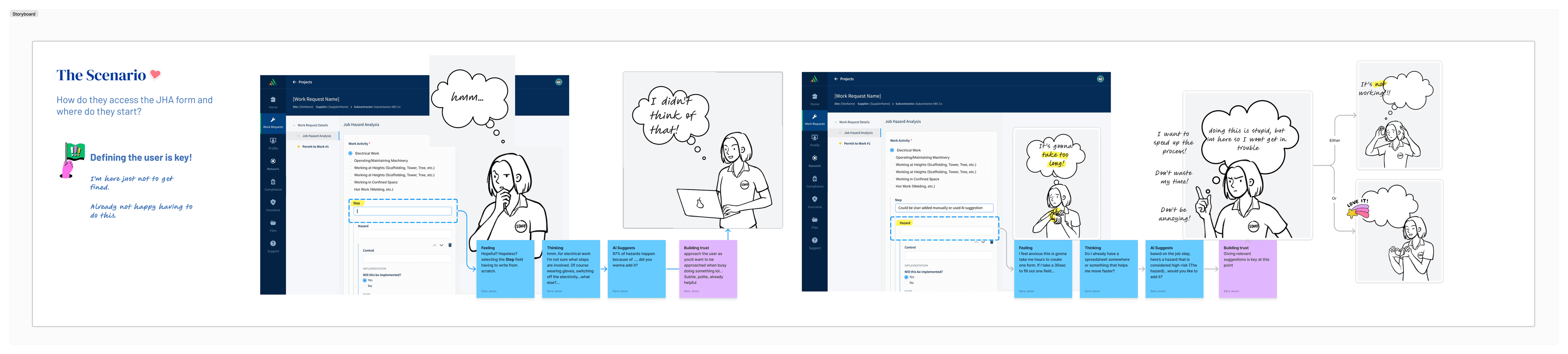
Empathy storyboard, AI trust journey
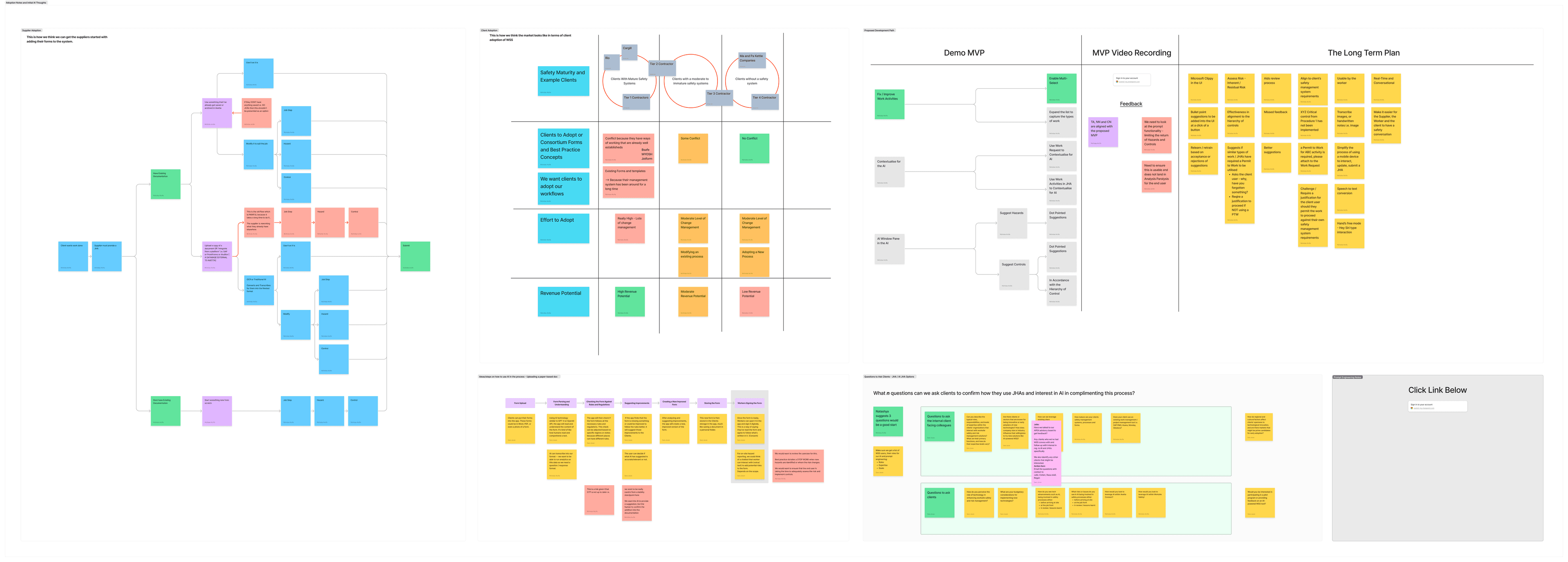
Journey Mapping & Data Strategy
We crafted comprehensive user journey maps to identify key data collection points, pinpoint opportunities for AI assistance, and ensure our AI recommendations were grounded in practical knowledge.
Before Work
During Work
After Work Completion
Stages
Create & allocate work
Specify requirements
Review adherence
Prepare for onsite
Monitor work
Confirm completion
Reconcile suppliers
Analyse performance
Goals
Define scope and assign contractor responsibilities
Align on compliance and safety requirements
Verify supplier meets all standards
Ensure workers are briefed and ready
Track progress against safety plan
Sign off on completed work items
Match invoices and worker records
Review safety outcomes and incidents
Actions
Create job hazard assessment form
Define required safety certifications
Cross-check supplier documentation
Conduct toolbox talk and site induction
Log observations and flag issues
Submit completion report for review
Process payments and close records
Generate performance dashboard
Pain Points
Forms are complex and time-consuming
Requirements unclear to contractors
Manual review process prone to errors
Workers lack context for risk forms
Delays in flagging safety issues
Approval bottlenecks slow closure
Reconciliation requires manual effort
Insights not actionable in real time
AI Opportunity
Auto-suggest hazards based on job type
Surface relevant requirements contextually
Flag non-compliant submissions early
Guide workers through risk assessment
Predict issues before they escalate
Automate completion verification
Streamline reconciliation with AI matching
Generate actionable safety insights
Fig B. Customer Journey Map. Identifying AI intervention points across the safety assessment flow.
UI Design & Prototyping
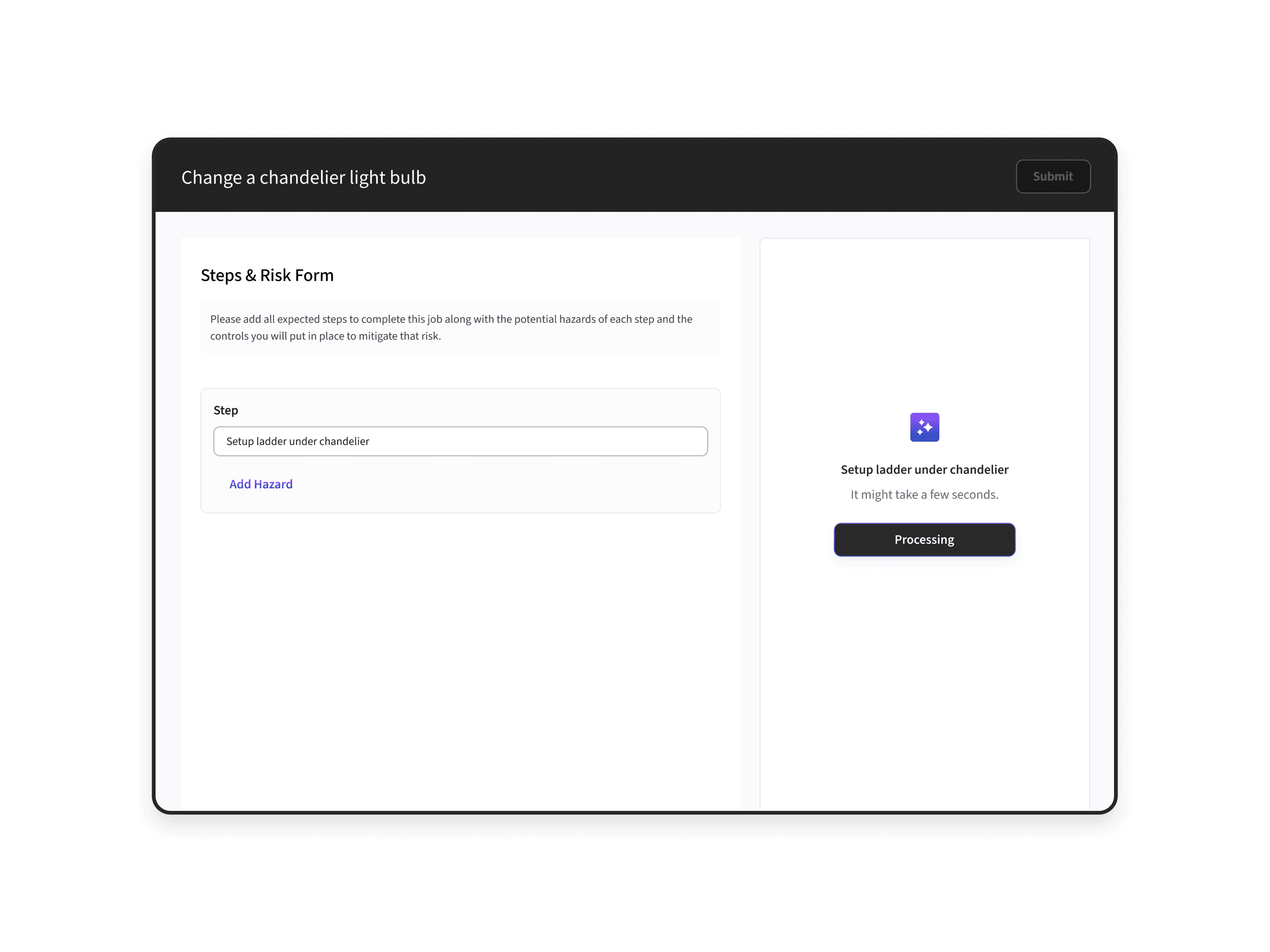
I designed a non-branded UI and prototype to test core value without the influence of brand recognition. Testing with real users who knew nothing about the project forced us to focus on fundamental utility. The feedback was strong.

Concept testing prototype, unbranded UI for user validation
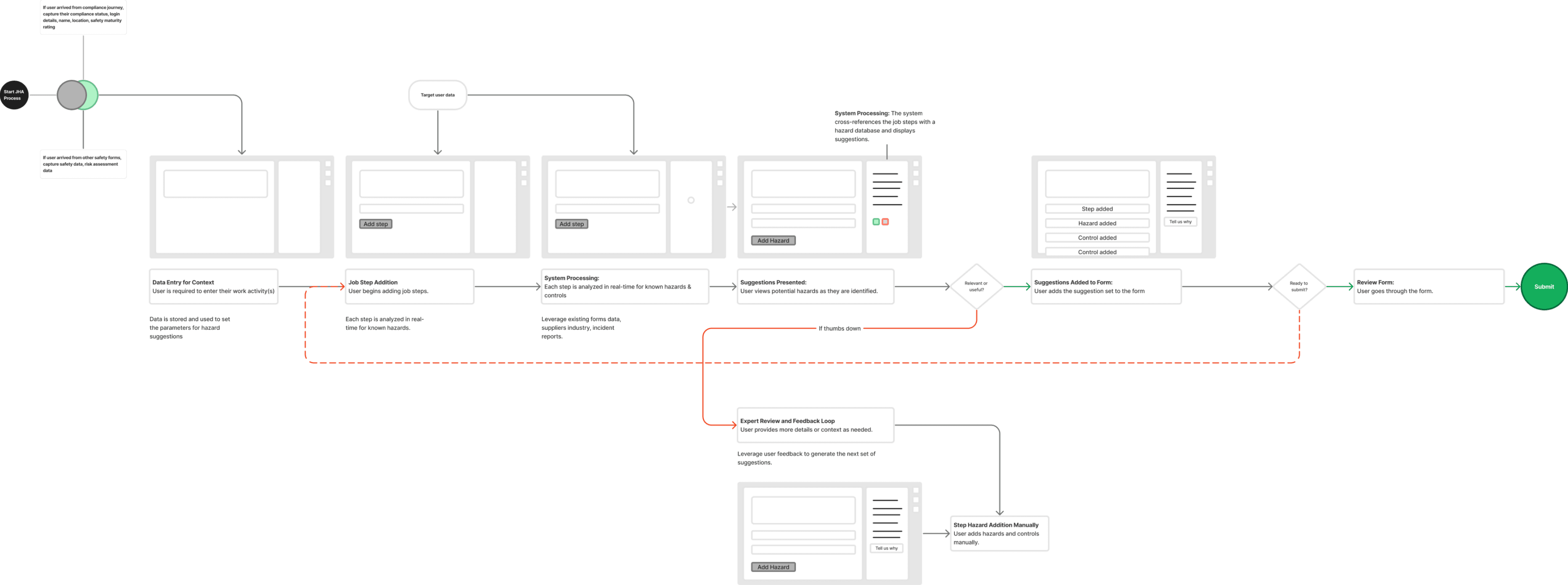
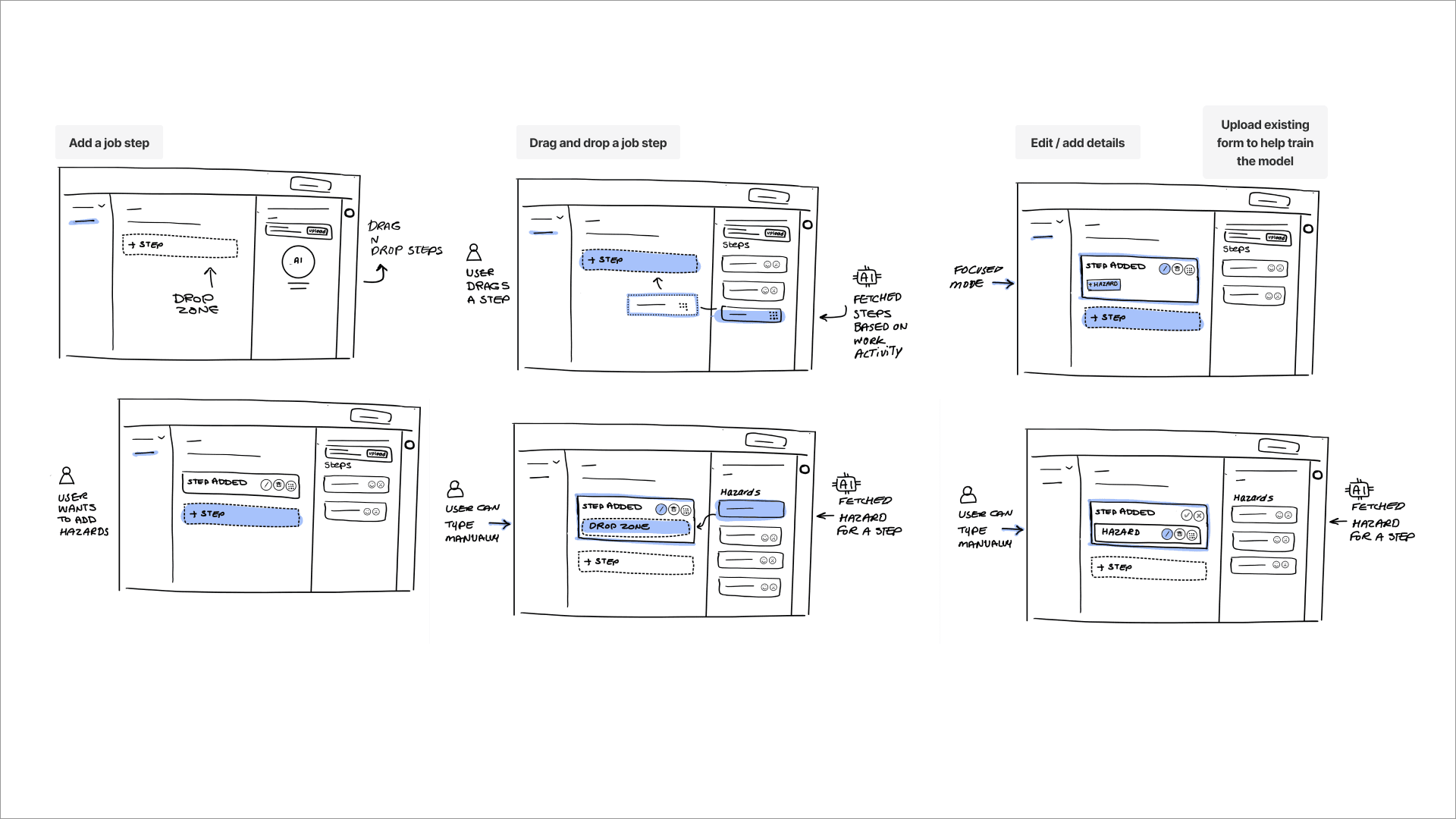
Fig C. Interaction Architecture. From data entry through AI suggestion to form submission.
Guiding Principles
Eight principles to keep the AI trustworthy, ethical, and useful.
Intent
To revolutionise safety assessments using Generative AI to enhance and simplify the process.
Ethics
All AI-generated recommendations adhere to strict criteria for accuracy, relevance and trust.
Data
Insights are grounded in the practical knowledge of suppliers and safety experts.
Purpose
To add value to every stakeholder involved in the safety assessment process.
Manifestation
Using natural language, our AI suggests hazards and controls, simplifying form completion.
Interaction
Smooth interaction empowering suppliers with suggestions while respecting their judgment.
Adaptation
Continuous learning ensures assistance stays up-to-date with the latest safety standards.
Impact
Adoption rates, decrease in incidents, and ease of use confirm this beneficial change.
Impact
Validated by real users in beta testing.
Beta testing with suppliers and contractors confirmed that the AI Advisor meaningfully reduced friction, improved form quality, and opened the door for ongoing refinement.
Operational Efficiency
Increased Reporting and Engagement
User Satisfaction and Adoption Rate
75%
Positive comments on the user experience and functionality
50%
Pointed out areas for improvement, specifically relating to depth and specificity
37%
Suggested future opportunities for expansion and refinement
Prototype. Beta walkthrough.
Looking Ahead
Refine & expand
Refining and expanding the AI advisor capabilities based on ongoing user feedback.
New touchpoints
Exploring additional points in the user journey where AI can add meaningful value.
AI in Audits
Currently exploring how AI can improve the Audit process. High potential, early stage.