Client Work // 01 · Risk Management SaaS
Risk Management SaaS
Designing Decision Systems for Safety & Compliance
Role
Lead Strategic UX Designer
Industry
Risk Management SaaS
Outcome
AI-Assisted Safety System
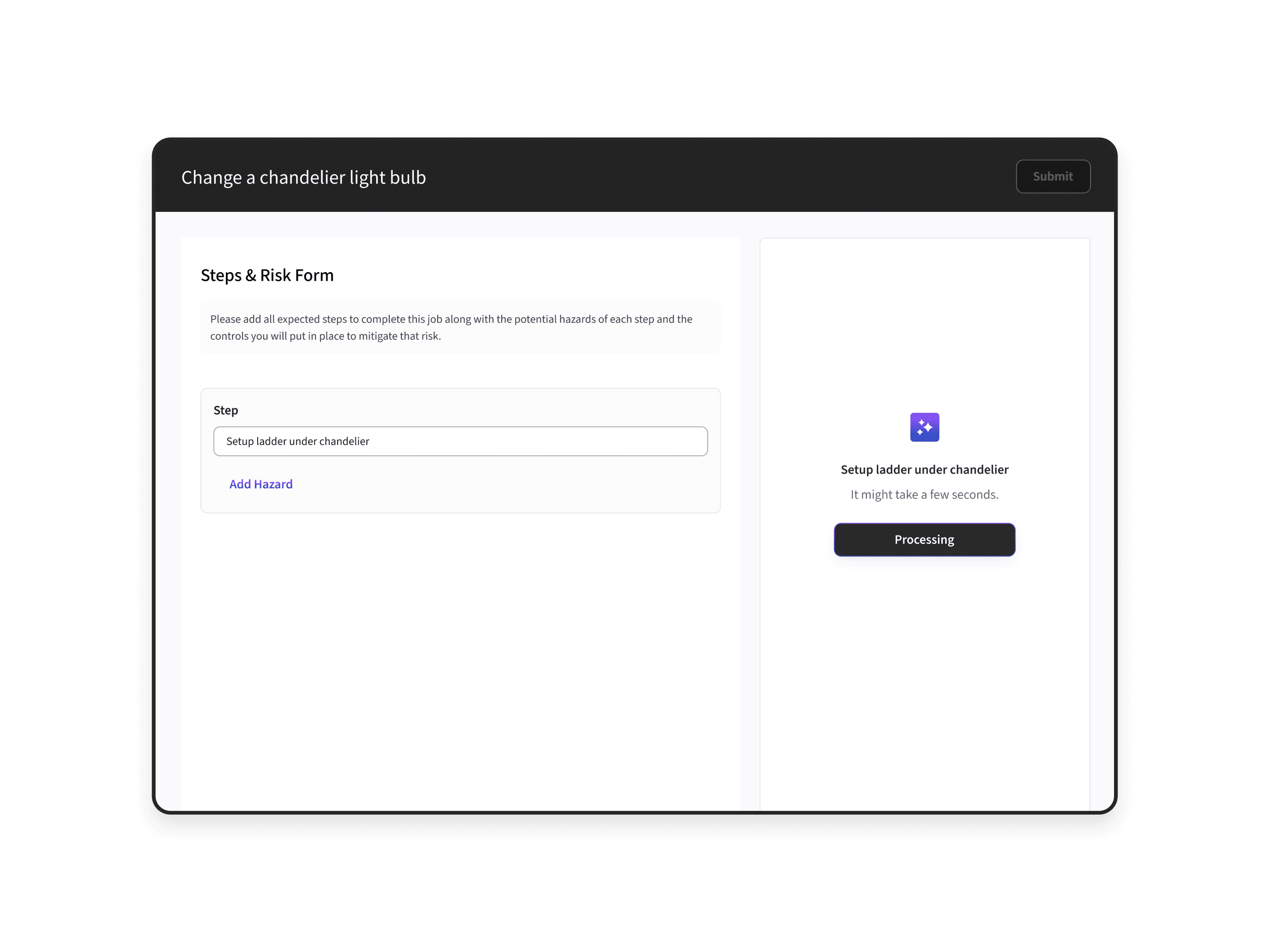
Context
Safety workflows where hesitation has consequences.
A risk management platform used to create Job Hazard Analyses (JHAs) and manage safety workflows.
Users operate in compliance-heavy environments where accuracy, speed, and clarity directly impact safety outcomes.
The Tension
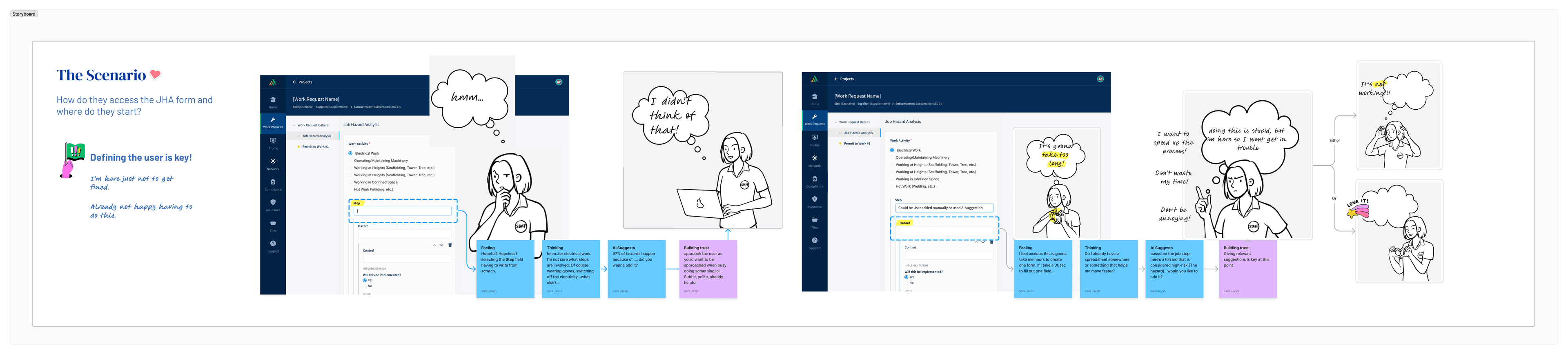
Empathy storyboard, mapping user uncertainty across the JHA workflow
Users weren't blocked.
They were overwhelmed and uncertain.
They struggled to:
- structure job steps correctly
- identify relevant hazards
- trust system suggestions
In safety workflows, hesitation leads to incomplete or low-quality outputs.
The Real Problem

Fig A. Customer Journey Map. Decision overload points across the JHA creation flow.
The system required users to manually construct complex safety documentation while handling:
- fragmented inputs
- unclear sequencing of steps
- cognitive overload from too many decisions
"The system didn't support how users think through risk."
Core insight, user research
My Insight
The problem wasn't form complexity.
It was decision overload under uncertainty.
Users needed:
Right-moment guidance
Guidance delivered at the right moment, not front-loaded at the start
Structured pathways
Structured decision pathways through complex safety assessments
Risk identification
Support in identifying risks, not just documenting them
System Breakdown
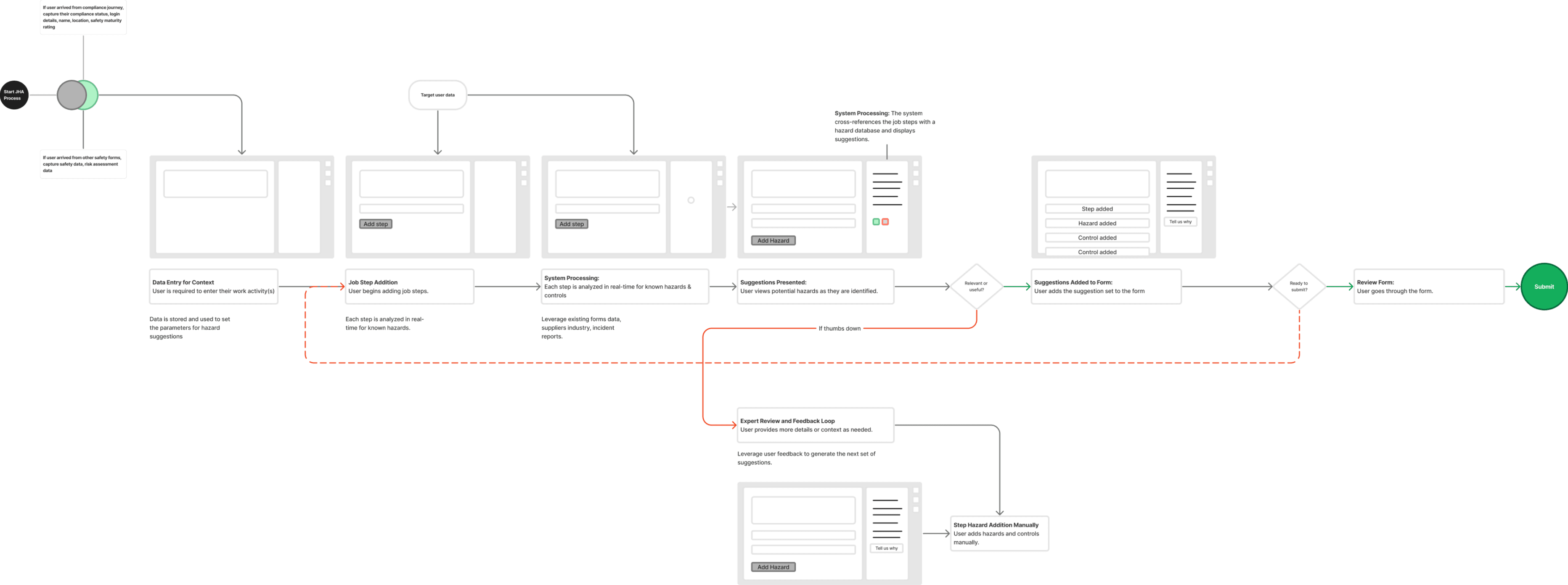
Fig B. System Architecture (before). Linear, rigid workflow with no decision support.
Before
- linear, rigid workflow
- manual step creation
- delayed or missing feedback
- no support for hazard identification
Result
- inconsistent JHA quality
- slow task completion
- low trust in system output
System Intervention
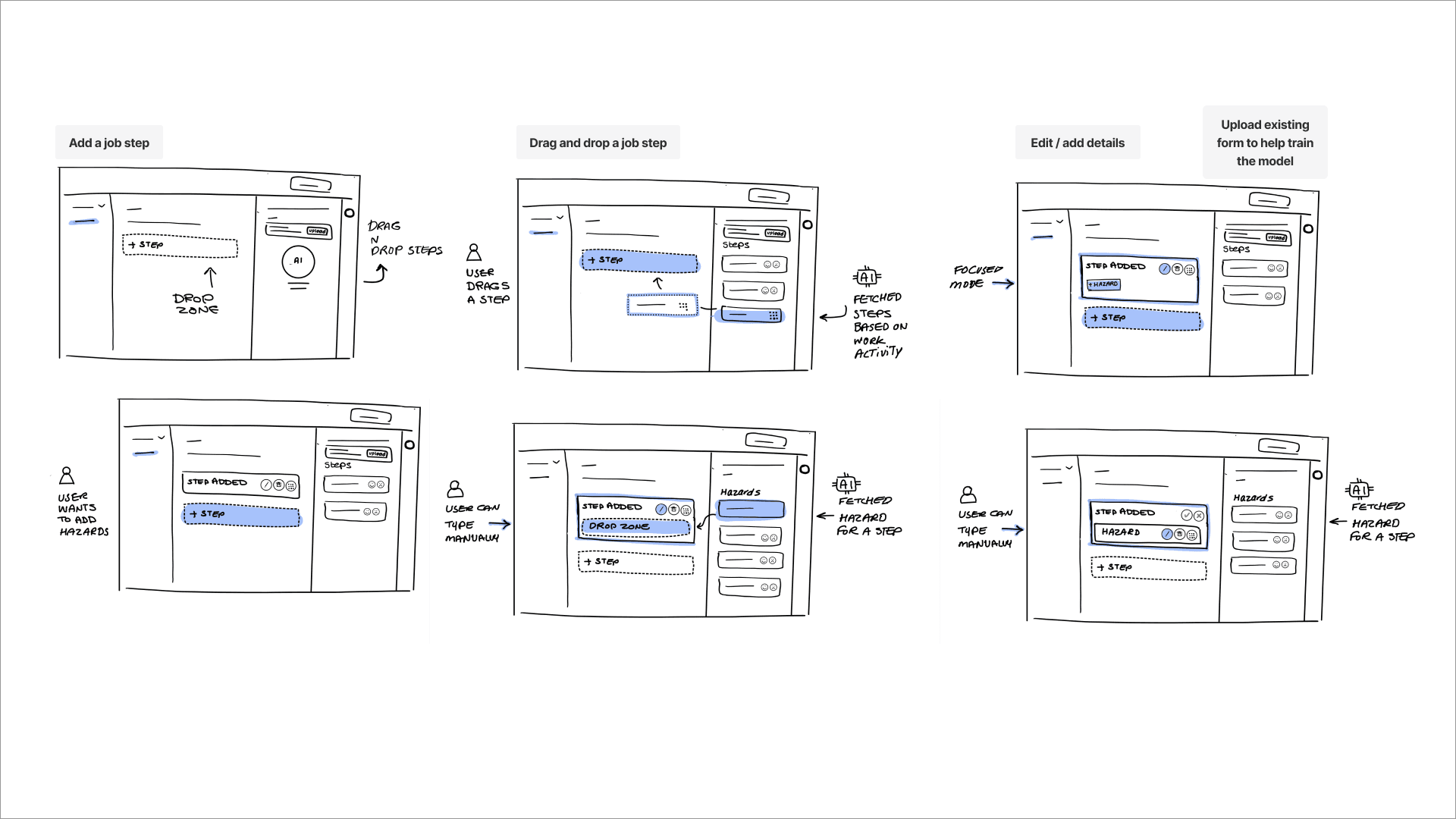
Early sketches, exploring AI-supported decision pathways
I redesigned the workflow as a decision-supported system.
Structured Step Creation
- introduced guided step input
- reduced ambiguity in sequencing
AI-Supported Hazard Identification
- prototype explored analysing steps as users entered them
- surfaced suggested hazards and controls for user review
Decision Anchoring
- users could accept, reject, or refine suggestions
- reduced cognitive load during evaluation
Feedback Loops
- immediate system response
- visible cause and effect relationships
System State (After)
- contextual inputs aligned with tasks
- AI-supported decision points
- predictable system behaviour
- reduced cognitive effort
Users moved from manual construction to guided decision-making.
Outcome
- designed to speed up JHA creation
- intended to improve quality and consistency
- aimed to increase trust in system recommendations
Strategic Layer
Positioning
- AI-assisted safety system, not just a documentation tool
- a differentiator in compliance-heavy markets
Risks identified
- adoption risks from change management
- dependency on data quality for AI accuracy
What This Taught Me About AI Systems
Three things that hold true across every AI product I've designed since.
Embedded AI
AI is most effective when embedded inside decision flows, not bolted on top
Contextual trust
Users trust suggestions when they understand the context behind them
Timing over volume
Timing of assistance matters more than the volume of suggestions
If I Took This Further Today
Adaptive AI
Adaptive AI suggestions based on individual user behaviour over time
Confidence scoring
Visible confidence scoring for AI recommendations
Predictive risk
Predictive risk surfacing earlier in the workflow, before form completion
Key Takeaway
"The goal is not to simplify the interface. The goal is to structure better decisions."
Design principle, Risk Management SaaS